
I’ve been thinking about intranets and user adoption. And not for the first time.
We absolutely love Cloudbase, our intranet even though it is one to two generations behind Hadron 8020, the Enterprise Intranet we sell. We know that our clients love their Hadrons, but still we see poor end user survey results sometimes. I want to know why.
We have the most powerful, most carefully constructed SharePoint intranet solution on the planet; we have been working on it for years. We worked really hard on the information architecture, we invested in a great visual design that also aids navigation, we struggled and strived to address the needs of ‘findability’ and ‘putability’ and we try our best to deploy it to our clients with appropriate training and best practice. So why is it that the user surveys continue to show users struggling with their shiny new intranet?
- Is it because they’re stupid? No, of course not. Sure, there is a distribution of ability, but that doesn’t explain the findings.
- Is it because SharePoint sucks? No again. SharePoint is ‘just’ a platform, though one with an enormous amount of capability; we know that we’ve built a good intranet application on top of that and while there are always more things we can do to make it better we are pretty confident that’s not the problem.
- Is it because people hate change? Frankly yes, that’s certainly part of the problem. But that’s a subtle thing…
A great intranet requires that people do some things differently in order to achieve best practice, just as they would in any other business process and this got me thinking about the cycle of hype, diffusion of innovation and how to face up to the challenge of getting users to not only adopt your new intranet but actually rather like it.
In a previous blog we talked about what users really want and we know that we tick all of those boxes.
 Figure 1 – The Hype Cycle |
The excitingly titled Cycle of Hype, shown in Figure 1, helps us think about the journey most users go through as they are expected to adopt a new technology, system or process.
Expectations are set high based on the promise of the technology and all the marvellous things it can do. Without this the business case almost certainly wouldn’t have been signed off – these things don’t come cheap you know. Sponsors and excited managers promote the wonders to come, espouse the benefits and evangelise the new dawn about to break (or some other poetic metaphor). After all the ‘business’ has thought lots about it and has decided what users want and need. Expectations reach a fever pitch.
At the peak, the intranet is launched (hopefully with an exciting name and not something tedious like “The Intranet” or “Teamnet” – come on folks, make some effort). It’s almost certainly been launched a little early, not everything is set up and there almost certainly hasn’t been enough testing, content load or user training, but at least it’s launched. Rubber hits the road, users log on with baited breath, anticipating the promised wonders. At this point chances are several things happen:
- Permission denied – the user hasn’t been set up properly or given the correct rights or hasn’t understood the instructions. They just can’t get in.
- Where’s my stuff? – the content etc. that they use daily hasn’t been migrated, so it might be lovely, but users have to constantly go back to old ways of working rather than use the intranet.
- I can’t do anything – in an effort to head off rampant content sprawl and untidy site development all the permission are locked down. Team sites have to be created by a central team, who are not resourced to deal with the flood of requests or there may not be any process for requesting team areas etc. Either way, users can’t use the collaboration and personal features they were told to expect.
- One template to rule them all – actually there may be several templates and Content Types, but they all require masses of governance type metadata: Author, review date, FOI class, change control status. All brilliant for heavily controlled content but hopeless and massively intrusive if you just need to knock out a quick note or Excel sheet for your teams pet project or weekly meeting.
- Breaking Bad – many of the new features simply don’t work or are badly done, poorly or incompletely configured. Search doesn’t help find things, links are broken, applications throw errors or behave in unexpected ways
- Someone else’s agenda – the great new features promised really are great, but for someone else (often in Comms, IT or governance), but don’t really help ‘ordinary’ users much. There is very little in the intranet that makes them want to do their work there.
Now starts the slide into the Trough of Disillusionment. Negative press/commentary begins; users start muttering in dark corners; managers begin to seek scapegoats (and suppliers lower their head below parapets), many refuse to try it until everything is fixed. Denials. Witch hunts. Incriminations. Only a brave few stand firm and remember what the grand dream was about, quietly note all that is good (users have such short memories and the bar for what is good enough gets reset almost instantly) or seek out the issues with a view to addressing them Many will waiver, but, hopefully, enough remain strong, until…
At last, trenchant gate keepers give ground, governance folk accept that some flexibility might be allowed, log on and security issues start to be recognised and addressed. Maybe an Intranet Board is established that listens to needs of the users, balances them against needs of the business and the voice of the original stakeholders and then makes changes to meet the broader need. Maybe a few apostles emerge from the wilderness to explain their conversion (maybe I’m taking the metaphors and allegories too far). Some people start to get real value from the new tool. Many get enough value to keep at it, a few remain sceptical, cynical or downright objectionable.
Step by step, improvement by improvement, the dream and the real world reach an accommodation and the intranet begins to deliver the benefits that were hidden behind the hype and the naysaying. The Plateau having been reached, the organisation sails off into the sunset… for about 6 months before business conditions change and the organisation realises that their intranet must continually change to match. This true plateau is the real end goal.
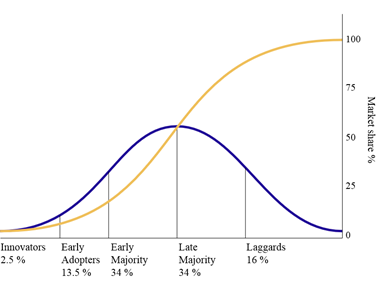
Figure 2 – Diffusion of Innovation and adoption |
User adoption, based on Diffusion of Innovation precepts, follows this cycle, with relatively little uptake until the plateau is arrived at. The early majority will emerge during the Slope of Enlightenment and the Late Majority only when the plateau is arrived at. Laggards may need to be beaten with sticks or allowed to disappear through ‘natural wastage’ – you just can’t help some people.
And the point to this longwinded diatribe?
- Be ready for the appearance of failure and have resources lined up to deal with it
- Acknowledge that what you think people want and what they will respond to are almost certainly different and won’t emerge until you give them something to complain about
- Avoid being dogmatic at all costs – a readiness to change direction based on new learning is healthy
- Give users at least some of what they want, not just what you think they want.
- Don’t over plan – there will be missteps, errors and gaps whatever you do, so get to your Minimally Viable Product as quickly as possible, then improve it based on feedback.
- Feedback – court it and act on it from the start.
- Launch the new intranet with the message that this is the start of the journey, not the end. Rinse and repeat.
- Have a roadmap, a decision making panel, a launch and adoption plan and a process for ongoing review and improvement
- Brief the Finance Director and execs on the Cycle of Hype so they don’t treat you badly when the Trough of Disillusionment arrives – you are expecting it and have a plan to see it through now, don’t you?

 Novia Works Ltd