
We all know that the COVID-19 pandemic will be with us for a while and that it will have consequences that will reach much further. Rights across the spectrum of our lives, economic, social, political, emotional, it will resonate for years or decades.
Our brilliant NHS has been at the forefront of the immediate challenge, and for that we have been and will continue to be grateful. However, as the reassuring as the daily UK case rate continuing to fall is, the NHS and the patients it serves are very far from recovering.
GP appointments are down by a third and hospital admissions are at about 15% of their normal capacity. The legitimate concerns to manage infection within the healthcare settings have had huge impacts on the business of delivering care across the clinical spectrum, reducing clinical capacity and influencing how patients are behaving. NHS Confederation figures, based on research from the Digital Healthcare Council, suggest 10 million patients could be waiting for NHS appointments by the end of the year. Meanwhile some experts have suggested that an extra 35,000 deaths related to cancer alone could occur due to delays in patients presenting for diagnosis and treatment during the pandemic.
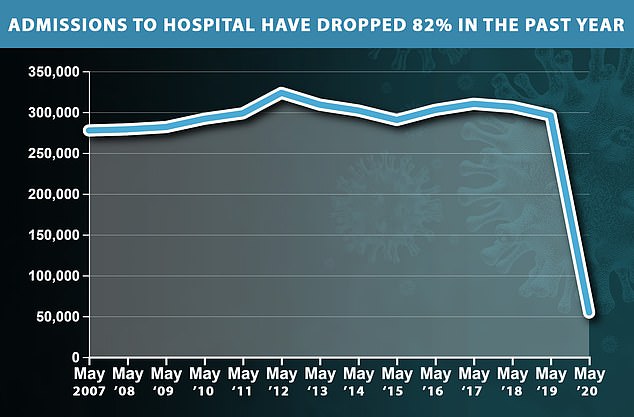
Inevitably the NHS waiting lists are affected. The 18 week target was always a stretch goal for the NHS; they look increasingly like goals which are not only impractical in the current situation, but will remain so indefinitely, with or without the £3 billion promised by the government. Currently, 40% of patients are waiting more than the 18 weeks for treatment and it’s nearly 26 weeks for 20% of them. Some hospitals are only able to offer 40% of the care they previously offered, it is claimed.
“Nationally, because there’s a big backlog already, that could take several years to get on top of. It’s not going to disappear overnight. Restoring normal services may be the biggest challenge the NHS has ever faced.”
Sir Jim Mackey, chief executive of Northumbria Healthcare trust
Listening to the rather excellent Digital Health Unplugged: Breaking the Covid-19 backlog podcast, some comments caught my ear;
“No capacity increases are possible for the foreseeable future”
Money can’t solve that. The operating constraints while the virus remains a threat coupled with the previous acute shortage of qualified clinical staff, also for the foreseeable future, lead us inexorably to the conclusion that we can’t turn it around by doing what we have been doing. As was stated, the future will need to be different and I agree with this sentiment, at least in their current form
“I don’t think outpatient clinics will be a thing in ten years’ time… if we could start from scratch, we wouldn’t make patients travel to physical places”
My observation is that, horrendous though many aspects of the pandemic have been, it kind-of couldn’t have come at a better time. For most of us, the technologies were readily available to remain isolated and still obtain most of the things we needed – food, companionship, entertainment, goods. For some of us already used to remote working, video conferencing and rich online technologies it was only mildly disruptive (though I acknowledge that there are many at the other end of the curve). This is true in personal and business lives. A long-time advocate at in South West London CCG said to us “I’d just like to thank you guys; COVID has been pretty seamless for us to deal with because of Kinesis. These are the kind of things we just couldn’t do with eRS A&G”
Whether it is direct intervention in the referral and booking process that companies like DrDoctor are doing, or the hugely effective referral avoidance achieved with effective Clinical Advice and Guidance, pioneered by Kinesis, or probably a dozen other little known but equally brilliant technologies, teams and interventions, it’s exactly this different thinking that is needed.
One thing we have learned from COVID-19 is that it is possible to think differently, to adopt new processes and technologies in a hurry. Now it’s up to the leaders and visionaries in our NHS to maintain that momentum, to embrace radical ways of delivering their world-class services and tackle the lingering effects of the pandemic not with brutish force but with agile thinking and intelligent action.
As Albert Einstein reminds us.
“We can not solve our problems with the same level of thinking that created them”


 Novia Works Ltd